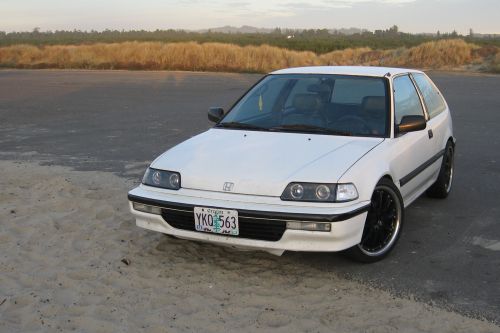
In a previous post, I had discussed the idea of wants and needs being blurred because of a profit-driven business. As I read through a number of blogs, I saw that many others had their own opinions on wants and needs. Peter believes that our inability to be satisfied with what we have forces us to constantly purchase new goods. Ashley feels that wants or needs are so intertwined that we don't think about things as wants or needs, but as urges that we have to satisfy. As I thought about it, I noticed that all three ideas had one thing in common: they all are affected by the idea of relative deprivation.
Relative deprivation is the idea where we believe we are being deprived of something we are entitled to. This tends to occur when we compare ourselves to those who are more advantaged. Businesses are profit-driven and benefit when they can create a need or want out of one of their goods. Some people buy it, some people don't. However, once someone buys it, another person of similar economic standing is going to compare their situations and realize that someone has something they don't have. When that realization hits, they feel deprived and are tempted to purchase the same or similar good just to keep up. Peter's idea fits in exactly with the concept. We are not able to be satisfied with what we have because we are constantly comparing ourselves to others. However, we always compare upwards, not downwards. "That person is driving a nice sedan while I'm just driving this crummy old Toyota." We feel deprived and aim to increase our own standing by trying to get an even nicer car. Ashley's ideas on wants and needs being so intertwined that we can't tell them apart is also explained by the idea of relative deprivation. The feeling of deprivation when compared to someone doing slightly better leaves us wanting more. However, do we really need more? It feels as if the only reason we want more is because we need more. Relative deprivation causes us to lose sight of what we truly need and what we want.
Saturday, July 19, 2008

Friday, July 11, 2008
It's not all just about race
Earlier in the week, we discussed difference and it ended up leading to a rather heated discussion about race. Race is just one of a multitude of ways by which we can be seen as being different from others. However, people can be judged differently even within race.
Economic status is one of the most common ways we differentiate ourselves from others. The haves are able to purchase luxury goods on a whim. The have-nots struggle to find enough income to get through each month without starving. A simple comparison of two neighborhoods of San Francisco, a "diverse" city with an eclectic mix of cultures and people, can demonstrate how our economic status separates us. I grew up in Chinatown, one of the most popular destinations for tourists in San Francisco. Despite all the restaurants and businesses in the area, many of the residents who reside here are fairly poor. The largest apartment structure in Chinatown, known as Ping Yuen, is a government-owned structure that leases apartments out to low-income families. Living in a government-owned apartment like that leaves people stigmatized, as they are seen as being too poor to be able to live without government aid. On the other side of town is the Sunset District. I attended middle and high school in this area and I got a chance to witness how different these two neighborhoods were on a daily basis. Each street in the Sunset is lined with houses. These weren't small houses either. Many of them are two-story houses with a two-car garage, front lawn, and backyard. Both of these neighborhoods are inhabited by mainly Asian families, yet the differences in the way people live their lives in each neighborhood are as different as night and day. Sunset residents are more apt to purchase things like luxury cars or plasma televisions. Chinatown residents are more likely to not purchase anything asides from dinner.
Economic status is one of the most common ways we differentiate ourselves from others. The haves are able to purchase luxury goods on a whim. The have-nots struggle to find enough income to get through each month without starving. A simple comparison of two neighborhoods of San Francisco, a "diverse" city with an eclectic mix of cultures and people, can demonstrate how our economic status separates us. I grew up in Chinatown, one of the most popular destinations for tourists in San Francisco. Despite all the restaurants and businesses in the area, many of the residents who reside here are fairly poor. The largest apartment structure in Chinatown, known as Ping Yuen, is a government-owned structure that leases apartments out to low-income families. Living in a government-owned apartment like that leaves people stigmatized, as they are seen as being too poor to be able to live without government aid. On the other side of town is the Sunset District. I attended middle and high school in this area and I got a chance to witness how different these two neighborhoods were on a daily basis. Each street in the Sunset is lined with houses. These weren't small houses either. Many of them are two-story houses with a two-car garage, front lawn, and backyard. Both of these neighborhoods are inhabited by mainly Asian families, yet the differences in the way people live their lives in each neighborhood are as different as night and day. Sunset residents are more apt to purchase things like luxury cars or plasma televisions. Chinatown residents are more likely to not purchase anything asides from dinner.
Thursday, July 10, 2008
Take me out to the ballgame

Can you hear the roar of 50,000 fans root, root, rooting for the home team? The smell of overpriced hot dogs and beer wafts around the entire stadium. For 81 games a year, the historic Yankee Stadium is the site that hosts the New York Yankees home games. Many famous legends have called the stadium home, from Mickey Mantle to Mariano Rivera. This celebrated stadium will be torn down at the end of the season though, as the Yankees are planning on moving to their new stadium, named New Yankee Stadium.
The image shows many different views depending on how it is looked at. One of the most obvious things we see in the picture is the 50,000 fans watching the game. However, some of these fans are enthusiastically rooting for their team. Some are apathetically sitting there, waiting for the game to end while dreading the impending traffic jam. Others appear to be heading to the concession stand to fill up on more overpriced snacks.
Another obvious sight is the heading on the picture of "Pride, Power, Pinstripes." Players have a lot of pride putting on the pinstripe jerseys that belong to the Yankees. With so many legendary players here before them, there is a sense of honor that comes with wearing these jerseys. I'm sure that there's far more honor wearing a Yankees jersey than there is of wearing a Kansas City Royals jersey. Power can be seen in different ways. One way would be power as in home-run hitting power. The Yankees certainly have that with Alex Rodriguez, who many believe will break the home-run record currently held by Barry Bonds. Power can also come from the fact that as a franchise, they are one of the most preeminent in the league. They easily have the resources, as witnessed by how high their payroll is compared to the rest of the league.
With this view of the game, all you can really discern are little figures moving around. The small, white flash of the baseball is nearly impossible to notice. The home umpire, dressed in huge, protective gear, would be hard to detect if it weren't for the fact that he SHOULD be at home plate. Despite the poor view, it's hard not to get swept up in the excitement of watching a game with 50,000 others. Besides, isn't the "thrill of victory and the agony of defeat" the reason we watch and love sports?
Tuesday, July 8, 2008
How long is this line?!?
At a recent convention that I attended, they attempted to organize and maintain a few separate entrance and exit lines. With hoards of people constantly coming in and coming out, definitive pathways were utilized in hopes of maintaining some semblance of structure. They had a couple of volunteer staff stationed at different places to ensure people didn't attempt to circumvent the system in place. Yellow caution tape was barely hanging on to the makeshift barricade. They allowed people to leave through the two sides or down the escalator. People were only allowed to enter going up the long flight of stairs or the escalator going up. Neither choice was a good one. Most of these people entering this area were extremely exhausted as it was. Having them walk up a long flight of stairs slowed the process to a near standstill. For the lazy and extremely tired people, they believed that taking the escalator was a great idea because they could stand there and have it slowly carry them up without having to waste any energy or effort. That line was a complete standstill.
Both of these temporary lines were there to help maintain a good flow of people constantly going in and out of the room. The caution tape dissuaded no one but a volunteer staff member was there to ensure people didn't try to go where they didn't belong. Many would walk into the building empty-handed, but that would change after exploring the exhibition hall. People hurriedly rushed into the exhibit hall and went off in different directions as stands were separated into at least twelve aisles. All the aisles led to the exact same exit and it was a definitive pain in the rear to leave. For those who came in empty-handed, nearly all of them left with at least two or three bags of goods either as gifts or souvenirs.
Both of these temporary lines were there to help maintain a good flow of people constantly going in and out of the room. The caution tape dissuaded no one but a volunteer staff member was there to ensure people didn't try to go where they didn't belong. Many would walk into the building empty-handed, but that would change after exploring the exhibition hall. People hurriedly rushed into the exhibit hall and went off in different directions as stands were separated into at least twelve aisles. All the aisles led to the exact same exit and it was a definitive pain in the rear to leave. For those who came in empty-handed, nearly all of them left with at least two or three bags of goods either as gifts or souvenirs.
Wednesday, July 2, 2008
The 4th of July main event
Since I will be out of town for the next few days with no internet access, I will write my third post of the week now so I have the three posts ready to be graded.
With the 4th of July weekend coming up, many people are going to be traveling with family or friends. Calvin mentioned that he would be going to Las Vegas with his friends. My housemate will be going to San Francisco for a party. The 4th of July weekend is always a great time for people to gather and relax for a few days. However, travel this year will be more difficult than ever. Extremely high gas prices are forcing more people to stay home than usual. The salmonella outbreak might make some weary of having the traditional 4th of July barbecue. While many of the "traditional" events we do during this holiday maybe cutback, one of the mainstays of the holiday will still remain: fireworks.
Fireworks are one of the most visually impressive sights we get to witness. I don't remember when the first time I witnessed a firework display was, but each year I look forward to the visual artwork on the 4th of July. We watch in awe as we hear the loud explosions and see the different patterns in the sky. The fireworks bring people together. We all gather and anxiously wait for the first explosions to light up the night sky. We witness, cheer and applaud the magical show.
Whether you choose to go out partying with friends or stay in and relax, I hope everyone has a safe and fun 4th of July weekend. You may have to pay an arm and a leg for gas, but here's hoping that the trip will be worth it and that new memories are made. For those who are going to enjoy the firework show, I hope the skies will be clear and you will be able to see one of the most spectacular displays known to man.
With the 4th of July weekend coming up, many people are going to be traveling with family or friends. Calvin mentioned that he would be going to Las Vegas with his friends. My housemate will be going to San Francisco for a party. The 4th of July weekend is always a great time for people to gather and relax for a few days. However, travel this year will be more difficult than ever. Extremely high gas prices are forcing more people to stay home than usual. The salmonella outbreak might make some weary of having the traditional 4th of July barbecue. While many of the "traditional" events we do during this holiday maybe cutback, one of the mainstays of the holiday will still remain: fireworks.
Fireworks are one of the most visually impressive sights we get to witness. I don't remember when the first time I witnessed a firework display was, but each year I look forward to the visual artwork on the 4th of July. We watch in awe as we hear the loud explosions and see the different patterns in the sky. The fireworks bring people together. We all gather and anxiously wait for the first explosions to light up the night sky. We witness, cheer and applaud the magical show.
Whether you choose to go out partying with friends or stay in and relax, I hope everyone has a safe and fun 4th of July weekend. You may have to pay an arm and a leg for gas, but here's hoping that the trip will be worth it and that new memories are made. For those who are going to enjoy the firework show, I hope the skies will be clear and you will be able to see one of the most spectacular displays known to man.
Tuesday, July 1, 2008
How do we learn about the past?
What do we utilize history for? We utilize it to help us learn from mistakes in the past. We utilize it as a way for us to make things better in the future. There are various methods by which history is passed down to us. The most interesting one that comes to mind is oral history. According to Wikipedia, oral history is the "recording, preservation and interpretation of historical information, based on the personal experiences and opinions of the speaker". The passing down of historical information in this fashion skews what future generations know of our history.
No one has an unbiased point of view when they attempt to recall what they remember of certain events. Reality television and the war in Iraq are the easiest examples that demonstrate this idea. People talk about reality television in different ways. Producers of these shows talk about it as a simple way to make money because they don't have to pay writers. Viewers who enjoy reality television shows see this as a golden age because of the sheer amounts of reality shows available that encompass so many different genres like love or game shows. Then there are people like me who view reality shows as some of the dumbest things ever created and can't believe there are so many people who like watching these shows.
The war in Iraq is a situation where differing opinions causes more friction. The transmission of how people interpret the war may actually lead to future disagreements. There are people who believe the war is going to help liberate the Iraqis. They will talk about the war in reverential terms. There are also many others who believe the war is being fought because of the oil that Iraq has. Their opinion would be that the war is a pointless one with pointless casualties.
The oral transmission of history can potentially cause a lot of issues between people with differing opinions. However, it is one of the most common ways by which we learn about our past. It can also be one of the best ways by which we learn from the mistakes of the past and improve our future.
No one has an unbiased point of view when they attempt to recall what they remember of certain events. Reality television and the war in Iraq are the easiest examples that demonstrate this idea. People talk about reality television in different ways. Producers of these shows talk about it as a simple way to make money because they don't have to pay writers. Viewers who enjoy reality television shows see this as a golden age because of the sheer amounts of reality shows available that encompass so many different genres like love or game shows. Then there are people like me who view reality shows as some of the dumbest things ever created and can't believe there are so many people who like watching these shows.
The war in Iraq is a situation where differing opinions causes more friction. The transmission of how people interpret the war may actually lead to future disagreements. There are people who believe the war is going to help liberate the Iraqis. They will talk about the war in reverential terms. There are also many others who believe the war is being fought because of the oil that Iraq has. Their opinion would be that the war is a pointless one with pointless casualties.
The oral transmission of history can potentially cause a lot of issues between people with differing opinions. However, it is one of the most common ways by which we learn about our past. It can also be one of the best ways by which we learn from the mistakes of the past and improve our future.
Wants vs. Needs
In class yesterday, we had a lengthy discussion on the differences between wanting something and needing something. The things we think we need and the things we think we want end up in a gray zone that causes us to lose focus on the purpose of purchasing the item to begin with. Do we really need a shiny new BMW when that trusty Honda Civic has been getting you from Point A to Point B safely for the past few years? Do girls really need that overly expensive Coach handbag when a simple $20 handbag at a local thrift store serves the exact same purpose? Do guys really need to get every edition of Madden even though the only really noticeable changes are the roster changes? The line between wants and needs is blurred thanks to the subtle nudges from producers looking to gather whatever profit they can.
A great example of a product that blurs the line between wants and needs is the computer. When I first got accepted into UC Davis, I was given a sheet with requirements of a computer for use at Davis. I looked at that sheet and thought to myself, "Holy crap, they want something so advanced!" Granted at the time I spent my entire high school life tethered to a Windows 95 computer with a whopping 16 MB of RAM and 1 GB hard drive. I gave the information to my brother and he got me a computer that matched the requirements. I brought it up to Davis during move-in and stared in amazement at the speed and power of this machine. About a week later, I realized what I would be doing with this powerful machine: downloading, watching anime, listening to music and writing papers on Microsoft Word. This wonderfully powerful machine was reduced to doing menial tasks that my ancient Windows 95 computer could have taken care of. UC Davis is still attempting to trick students into thinking it needs high-end computers for school. I looked at the information and nearly fell out of my chair. These aren't the specifications of a computer needed for school. These are the specifications of a computer waiting to play some high end game on the best settings. They then had a separate page to list "obsolete systems" that were not suitable. As I examined the list, I saw that the computer I am using to type this entry does not even meet most of the standards on the "obsolete system".
Needs and wants, like most things in this world, are determined by each individual. Some people might "need" that 103 inch plasma television. I am perfectly content with the 24 inch television I have in my living room. I hope my "obsolete system" doesn't crash before I submit this post.
A great example of a product that blurs the line between wants and needs is the computer. When I first got accepted into UC Davis, I was given a sheet with requirements of a computer for use at Davis. I looked at that sheet and thought to myself, "Holy crap, they want something so advanced!" Granted at the time I spent my entire high school life tethered to a Windows 95 computer with a whopping 16 MB of RAM and 1 GB hard drive. I gave the information to my brother and he got me a computer that matched the requirements. I brought it up to Davis during move-in and stared in amazement at the speed and power of this machine. About a week later, I realized what I would be doing with this powerful machine: downloading, watching anime, listening to music and writing papers on Microsoft Word. This wonderfully powerful machine was reduced to doing menial tasks that my ancient Windows 95 computer could have taken care of. UC Davis is still attempting to trick students into thinking it needs high-end computers for school. I looked at the information and nearly fell out of my chair. These aren't the specifications of a computer needed for school. These are the specifications of a computer waiting to play some high end game on the best settings. They then had a separate page to list "obsolete systems" that were not suitable. As I examined the list, I saw that the computer I am using to type this entry does not even meet most of the standards on the "obsolete system".
Needs and wants, like most things in this world, are determined by each individual. Some people might "need" that 103 inch plasma television. I am perfectly content with the 24 inch television I have in my living room. I hope my "obsolete system" doesn't crash before I submit this post.
Subscribe to:
Posts (Atom)